Europe’s Clean Energy Expansion Is Creating a Broader Industrial Workforce
Europe’s transition toward renewable energy is no longer only a story about installed capacity and electricity generation. It is increasingly becoming a story about jobs, industrial development and the transformation of the energy supply chain.
According to the latest European solar employment data, the solar PV and battery storage sectors supported approximately 982,000 full-time equivalent jobs across the European Union in 2025. Solar PV represented the majority, with around 874,000 jobs, while battery energy storage contributed approximately 108,000 positions.
The figures highlight the growing economic impact of renewable energy deployment and show how solar and storage are becoming increasingly connected parts of Europe’s energy infrastructure.
Solar PV Remains the Main Source of Employment
Solar PV continued to account for most renewable-energy-related employment in Europe.
The EU installed approximately 69 GW of new solar capacity in 2025, creating demand across project development, engineering, installation, construction, equipment supply and long-term maintenance.
Installation and project deployment remained the largest source of solar employment, representing roughly 85% of total PV jobs in 2025. At the same time, employment in operations and maintenance continued to grow as Europe’s installed solar fleet expanded.
This shift is important for the industry. As more PV systems reach operation, the market is gradually moving beyond simply building new projects. Asset management, maintenance, system upgrades and long-term performance are becoming increasingly important parts of the solar value chain.
Utility-Scale Solar Is Becoming More Important
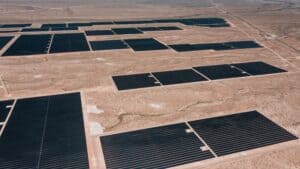
Another notable development is the growing role of large-scale solar projects.
The development reflects the increasing scale of Europe’s solar market. Larger projects require extensive engineering, civil works, electrical infrastructure, mounting structures and long-term maintenance.
For utility-scale PV projects, mounting systems are particularly important because they directly influence structural stability, installation efficiency, material consumption and long-term system performance.
As project sizes increase, developers and EPC contractors are placing greater emphasis on standardized components, reliable supply chains and mounting solutions adapted to different site conditions.
Battery Storage Adds a New Layer to the Solar Industry
Battery energy storage is also becoming a significant part of Europe’s clean-energy workforce.
In 2025, battery storage installations in the EU reached approximately 27 GWh, with BESS contributing around 108,000 full-time equivalent jobs. This was the first year that battery storage was separately included in the European solar employment analysis.
The growing connection between solar and storage is changing the structure of renewable energy projects.
Solar generation can fluctuate depending on weather and time of day, while energy storage can help shift electricity availability and improve the flexibility of the power system. As a result, solar-plus-storage projects are becoming increasingly relevant for grid integration and energy management.
This trend is also creating new demand for expertise in battery systems, power electronics, electrical engineering, project construction and system operation.
Employment Growth Is Also Changing Shape
Although the number of jobs created by renewable energy is significant, the structure of employment is expected to change over the coming years.
European solar employment could decline in some deployment-related areas by 2030 as annual installation growth becomes more moderate and productivity improves. However, this does not necessarily mean that the solar industry itself is shrinking.
Instead, employment is expected to move toward areas such as:
- Operations and maintenance
- Solar equipment manufacturing
- System upgrades and repowering
- Decommissioning and recycling
- Energy storage
- Digital monitoring and energy management
For example, solar operations and maintenance employment is projected to increase as Europe’s installed PV fleet continues to expand, while jobs associated with recycling and end-of-life management are also expected to become more important.
This suggests that the European solar industry is entering a more mature phase, where the focus is gradually shifting from rapid deployment toward long-term asset management and system optimization.
What This Means for the Solar Supply Chain
The employment figures also provide an important signal for companies operating across the solar supply chain.
As the European market matures, competition will increasingly depend not only on price, but also on product reliability, engineering support, delivery capability and long-term project performance.
For mounting system suppliers, this creates several opportunities.
Large-scale solar development requires mounting solutions that can adapt to different wind and snow conditions, terrain characteristics, module configurations and foundation requirements. At the same time, developers and EPC companies need suppliers that can provide consistent quality and reliable delivery across different projects.
The growth of utility-scale PV also means that mounting structures are becoming an increasingly important part of the overall project supply chain.
A More Mature European Solar Market
Europe’s nearly one-million-job solar and storage workforce demonstrates that renewable energy has developed into a major economic sector rather than simply an emerging technology market.
The next stage of growth is likely to be less focused on installation volume alone. Instead, the industry will increasingly emphasize system reliability, energy storage, grid integration, asset management, manufacturing and circularity.
As the European PV market continues to mature, reliable equipment, efficient project execution and long-term technical performance will become increasingly important. Companies that can support these requirements will be better positioned to participate in the next phase of Europe’s energy transition.
The future of solar is not only about installing more capacity. It is about building a stronger, smarter and more sustainable energy infrastructure around it.
Sources: PV Magazine / SolarPower Europe