What Is Photovoltaic System & How Does It Work?
A photovoltaic (PV) system converts sunlight directly into electricity using semiconductor technology. These systems range in scale—from compact rooftop arrays for homes to large utility-scale solar farms. While PV systems can also operate in off-grid and hybrid settings, this article focuses on grid-tied PV systems, which connect directly to the electrical utility grid.

How Does a Photovoltaic System Work?
At the core of every PV system is the photovoltaic effect—a process in which photons from sunlight strike a semiconductor material, releasing electrons and generating an electric current.
This current is direct current (DC), which is not compatible with standard household or grid electricity that uses alternating current (AC). To bridge this gap, inverters are used to convert DC into usable AC electricity.
Once converted, the electricity can:
- Power local loads (e.g., appliances, machinery)
- Be exported to the utility grid
- Be stored in batteries (in hybrid systems)
Key Components of a Photovoltaic System
In addition to the solar panels, a PV system comprises a range of balance of system (BOS) components that ensure safe and efficient operation. These include inverters, racking structures, wiring, safety devices, and monitoring equipment.
1. Solar Panels
Solar panels are made up of solar cells, typically built from crystalline silicon—a material known for its reliable performance and cost-effectiveness. Each cell converts sunlight into electricity, and when combined, they form a solar module or panel.
Features of solar panels:
- Semiconductor layers absorb light and release electrons.
- Conductive layers capture and transfer the generated current.
- Anti-reflection coatings maximize sunlight absorption.
- Encapsulation protects the cell from environmental damage.
While silicon panels dominate the market, other high-efficiency options like thin-film or multi-junction cells exist for specialized applications, albeit at a higher cost.

2.Inverters
The inverter is essential for any grid-connected PV system. It converts DC electricity from the solar panels into AC electricity, which is compatible with the electrical grid and most household devices.
Most inverters have conversion efficiencies of 90% or higher and contain important safety features including:
- Monitoring capabilities (real-time performance data)
- Safety features like Ground Fault Circuit Interruption (GFCI)
- Anti-islanding functions to shut down the system during grid outages
Inverters are typically the second-most expensive component of a PV system after the panels and come in different types:
- String inverters
- Microinverters
- Hybrid inverters (for systems with energy storage)
3. Racking and Mounting Systems
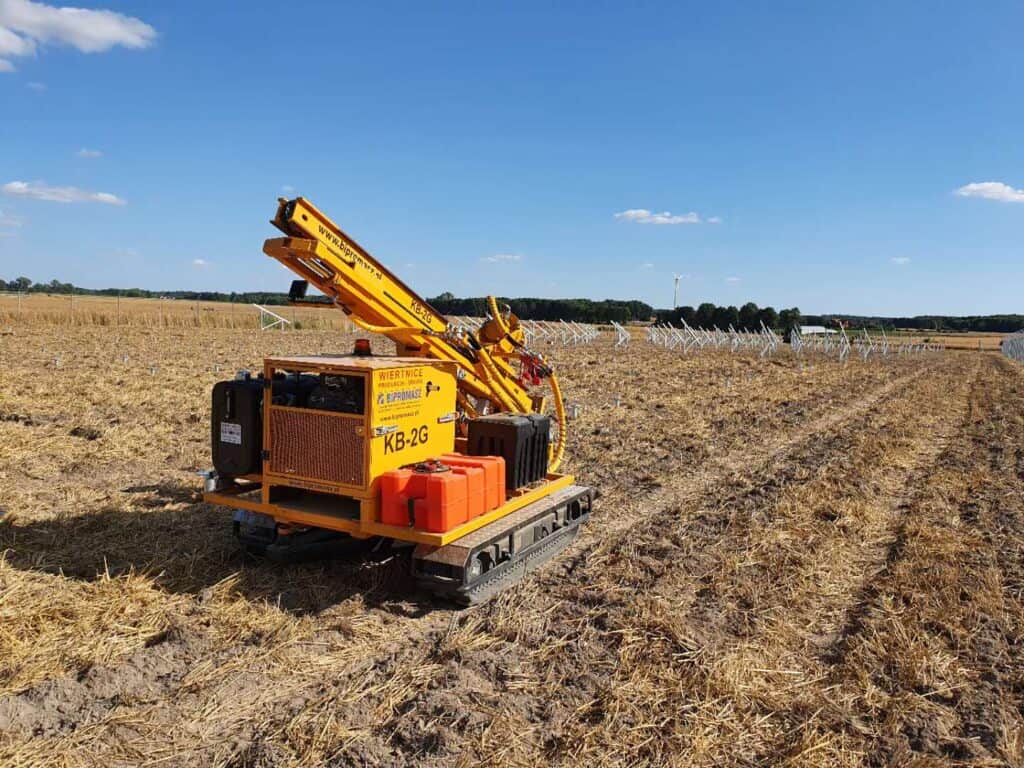
Racking refers to the mounting apparatus which fixes the solar array to the ground or rooftop. Typically constructed from steel or aluminum, these apparatuses mechanically fix the solar panels in place with a high level of precision. Racking systems should be designed to withstand extreme weather events such as hurricane or tornado level wind speeds and/or high accumulations of snow.
Main racking types:
- Flat roofs: typically secured either through weighted ballast to hold the array in place without roof penetrations, or mechanically anchored solutions, where the support legs are fastened into the roof structure to withstand wind uplift and environmental loads.
- Pitched roofs: mechanically anchored to the roof structure using hooks or clip kits.

- Fixed tilt or adjustable
- Can incorporate solar trackers which use motors and sensors to track the sun through the sky, increasing the amount of energy generated at a higher equipment and maintenance cost.
A racking system also plays a role in grounding and bonding to prevent electrocution improve system longevity.
4. Additional Electrical Components
A number of supporting electrical parts are essential for safe, compliant solar PV installations:
Combiners
To merge two or more electrical cables into one larger one. Combiners typically include fuses for protection and are used on all medium to large and utility-scale solar arrays.
Disconnects
Electrical gates or switches which allow for manual disconnection of an electrical wire. Typically used on either side of an inverter, namely the “DC disconnect” and “AC disconnect” these devices provide electrical isolation when an inverter needs to be installed or replaced.
Circuit Breakers
To protect electrical systems from over current or surges. Designed to trigger automatically when the current reaches a predetermined amount, breakers can also be operated manually, acting as an additional disconnect.
Electric Meters
To measure the amount of energy that passes through it and is commonly used by electric utility companies to measure and charge customers. For solar PV systems, a special bi-directional electric meter is used to measure both the incoming energy from the utility, and the outgoing energy from the solar PV system.
Wiring/ Electrical Cable
To transport the electrical energy from and between each component and must be properly sized to carry the current. Wiring exposed to sunlight must have protection against UV exposure, and wires carrying DC current sometimes require metal sheathing for added protection.
Final Words
Photovoltaic systems are a proven and increasingly affordable solution for generating clean, renewable electricity. Whether for residential, commercial, or industrial use, PV systems play a vital role in reducing carbon emissions and lowering energy costs. Following Yuens and learn more about the industrial insights.
For technical support, product specifications, or information on compatible mounting systems, you are welcome to reach out to:
Website: Yuens Solar Mounting
Email: contact@yuen-s.com
WhatsApp: +86 18965191070
YouTube: Yuens-Solar
Facebook: Yuens Solar Mounting
LinkedIn: Yuens Solar Mounting